

What Happens to Tattoo Ink in Your Body? How Tattoo Ink Affects the Lymphatic System
Have you ever wondered what happens to tattoo ink after the procedure?
When the tattoo needle punctures the skin and deposits ink, the lymphatic vessels collect it and transport it to the nearest lymphnodes for clearing. Because tattoo ink is inert, permanent, and enzyme resistant to breakdown by the body's defence mechanisms, it cannot be degraded or removed. This leads to an acute inflammatory phase that starts within hours and can last for several days.
A study published in the journal *Dermatologic Surgery* noted that inflammation can start at the tattoo site within 24 hours, responding to the foreign material introduced.
How Does Tattooing Affect the Lymphatic System?
Tattooing can affect the lymphatic system in several ways:
- Causes a chronic inflammatory state
- Alters the physical structure of lymph vessels
- Causes lymph node enlargement
- Reduced ability to remove waste from the tattooed skin area
A study published in the Journal of Anatomy found that the introduction of foreign substances, like tattoo ink, can lead to changes in lymph flow patterns around the tattooed area.
Chronic Inflammation and Tattoo Ink
Macrophages, which are immune cells, attempt to engulf and eliminate the ink. However, as they take in the ink, they become overloaded and eventually die, releasing their contents back into the body. This cycle of engulfment and death can result in a chronic inflammatory state, characterised by elevated levels of pro-inflammatory cytokines (proteins that promote inflammation).
According to research in *Cell Reports*, the persistent presence of foreign ink can trigger a continuous immune response.
Tattoo Ink and Lymphatic Vessel Changes
The lymphatic vessels may undergo structural changes to cope with the abnormal demand placed on them due to the inflammatory response and the accumulation of ink particles. This alteration can lead to a reduced efficiency of lymph flow, negatively affecting the lymphatic system's ability to clear waste from the surrounding tissues.
Publications in the *Journal of Investigative Dermatology* documented cases of lymphadenopathy (anormal enlargement) related to tattooing, suggesting that the lymphatic system's response can significantly alter its function.
Tattoo Ink in the Lymph Nodes
The ink pigments in lymph nodes impairs their normal function. This chronic inflammatory response may persist for at least two months following the tattooing process, and there can be long-term effects that last for years or even a lifetime.
In fact, studies have indicated that tattoo ink can remain in the lymphatic system indefinitely due to its inability to be biodegraded by the body. Instead of acting as a detoxification system, the lymphatic system effectively becomes a reservoir for tattoo ink.
What Is Tattoo Pigment Lymphadenopathy?
Outlook
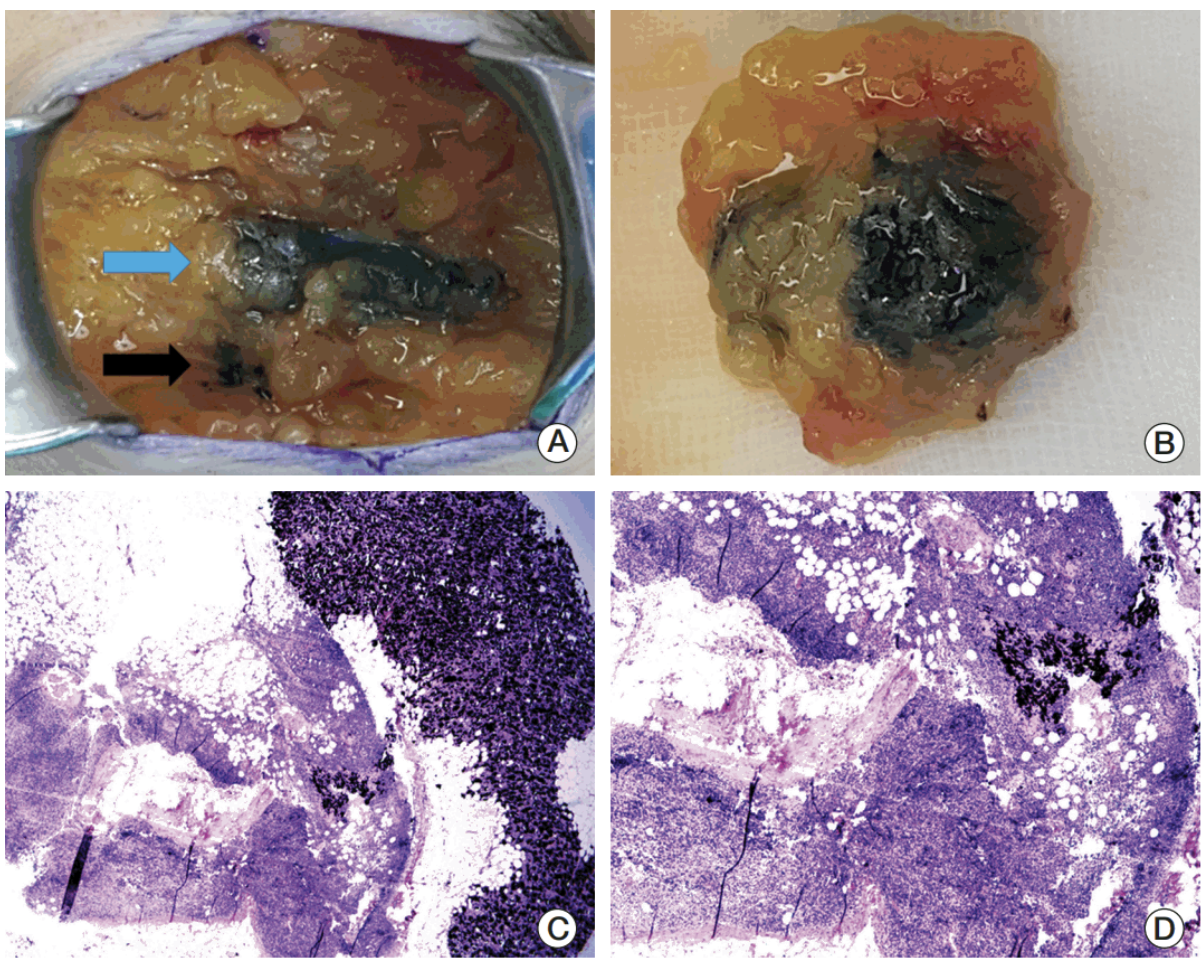
The accumulation of ink in lymph nodes is referred to as tattoo pigment lymphadenopathy. This condition can result in misdiagnoses during cancer screenings, as affected nodes may appear darkened, leading to unnecessary medical procedures.
A report in *The American Journal of Dermatopathology* highlighted instances where tattoo pigment was mistaken for malignant changes, leading to surgical interventions.
Long-term ink storage in lymph nodes may pose a potential risk for lymphoma, with some studies indicating increased cancer risk associated with chronic inflammation
What Happens to Tattoo Ink During Tattoo Removal?
Tattoo Removal
Laser treatment is used to remove tattoos by dramatically reducing the pigment size to nanoparticles, allowing them to be excreted via sweat or urine. However, this elimination is minimal compared to the volume that remains in the body.
A study in *Lasers in Surgery and Medicine* demonstrated that while laser treatment can break down some ink particles, a substantial portion of the original ink remains deposited within the tissues and lymphatic system.
Tattoos can also be removed surgically by skin removal.
How MLD Can Help in Tattoo Removal
Case History: A 28 year old female with swollen inguinal nodes in the right groin.
During the treatment I noticed a faded tattoo on the inside of her right hip. When asked, she said she had had 3 laser sessions to date to remove it. The laser treatment had broken the ink pigments into tiny particles (nanoparticles) which were then taken into the nearest lymph nodes i.e. groin. This substantial reduction in pigment size allows the body to remove it and MLD is a good aid during this procedure. After one treatment the lymph nodes normalised bringing significant relief to the client.
Does Tattoo Ink Colour Matter?
Research has shown that red and black inks can be particularly toxic, leading to increased cell death and heightened inflammatory responses.
In laser treatment, green ink appears to be more difficult to remove than other colours.
An analysis published in *Toxicology in Vitro* found that certain pigments used in tattoo inks can elicit stronger cytotoxic effects, warranting further investigation into their safety.

Conclusion
Given these findings, further studies are essential, along with stricter regulations concerning ink ingredients to ensurethe safety of tattooing practices.
Frequently Asked Questions
What happens to tattoo ink after the procedure?
When the tattoo needle punctures the skin and deposits ink, the lymphatic vessels collect it and transport it to the nearest lymph nodes for clearing.
Does tattoo ink enter the lymphatic system?
Yes. Tattoo ink can be collected by lymphatic vessels and transported to nearby lymph nodes, where it can remain indefinitely due to its inability to be biodegraded by the body.
How does tattooing affect the lymphatic system?
Tattooing can cause a chronic inflammatory state, alter the physical structure of lymph vessels, cause lymph node enlargement, and reduce the ability to remove waste from the tattooed skin area.
Does tattoo ink stay in the body?
Studies have indicated that tattoo ink can remain in the lymphatic system indefinitely due to its inability to be biodegraded by the body.
What is tattoo pigment lymphadenopathy?
The accumulation of ink in lymph nodes is referred to as tattoo pigment lymphadenopathy. It can result in misdiagnoses during cancer screenings because affected lymph nodes may appear darkened.
Can tattoo ink be completely removed?
Laser treatment significantly reduces the pigment size to nanoparticles, allowing some particles to be excreted via sweat or urine. However, this elimination is minimal compared to the volume that remains in the body. Tattoos can also be removed surgically by skin removal.
Does tattoo ink colour matter?
Research has shown that red and black inks can be particularly toxic, leading to increased cell death and heightened inflammatory responses. In laser treatment, green ink appears to be more difficult to remove than other colours.

