
Manual Lymphatic Drainage (MLD) for Breasts | Post-Surgical Recovery & Breast Health - By Jan Moor
Manual Lymphatic Drainage (MLD) for breasts is a gentle, non-invasive therapy that reduces swelling, softens scar tissue, and supports healing across a wide range of breast conditions: from post-surgical recovery after mastectomy or augmentation, to breastfeeding complications, hormonal tenderness, and lymphoedema. Using slow, feather-light movements, MLD stimulates lymph flow, eases inflammation, and helps the body heal. Clients often report reduced tightness, better mobility, softer tissue, and a deep sense of calm. With over 20 years of experience treating breast conditions in women, Vitality Center provides specialist MLD care at every stage of your journey.
A Specialist Approach to Breast Health
Over the past 20 years I have treated women with a diverse range of breast conditions. A young woman dealing with engorgement during breastfeeding has very different needs from someone three weeks out of a DIEP flap reconstruction. But in most cases, poor lymph flow in the affected area is a common thread.
MLD is not a general wellness treatment. When applied to the breast and surrounding tissue, it is adapted to each person's diagnosis, surgical history, and stage of recovery. Get the timing and technique right, and the results can be remarkable.
Breast Conditions I Treat with MLD
Hormonal and Life-Stage Changes
Breast tenderness linked to puberty, pregnancy, and menopause is often driven by fluid congestion in the glandular tissue. MLD clears that stagnation gently, reducing discomfort without medication.
For breastfeeding clients, engorgement and mastitis (a painful inflammation caused by blocked milk ducts) can respond well to lymphatic drainage. Even a single session can bring real relief, and treatment does not interfere with lactation.
Benign Breast Conditions
MLD can reduce discomfort, ease congestion, and improve tissue mobility for clients with:
· Breast cysts and fibrocystic changes · Fibroadenoma (fibrous, lumpy breast tissue)
Many clients find that regular MLD makes a real difference to their day-to-day symptoms.
Post-Surgical Breast Recovery
Surgery, whether cosmetic, reconstructive, or oncological disrupts lymphatic pathways. This is often what drives post-operative swelling, stiffness, and scar formation. MLD is one of the most effective ways to support recovery and avoid complications.
I provide specialist post-surgical aftercare for:
Cosmetic and reconstructive procedures: Augmentation (implants), tissue expansion, fat grafting, breast lift (mastopexy), breast reduction
Oncological surgery: Mastectomy, axillary cording (axillary web syndrome), capsular contracture, flap reconstruction (TRAM, DIEP, LD, hybrid flap, nipple reconstruction)
Scar rehabilitation: MLD helps to flatten raised scar tissue, minimise visibility, reduce tightness, and restore movement across the chest wall and surrounding areas.
Lymphoedema: When lymph nodes are removed or damaged during oncological surgery, chronic swelling can develop. MLD is one of the most effective ways to manage lymphoedema long term.
MLD for Men
I also treat:
· Gynaecomastia — following liposuction surgery, to reduce swelling and fibrosis
A Client's Story
One case I remember was a 45 year old woman who came to Vitality Center for aftercare following a TRAM flap breast reconstruction: a procedure where tissue is transferred from the abdomen to rebuild the breast after mastectomy.
At two weeks post-surgery, her chest was swollen and barely mobile, the tissue dense and tender. We started with very gentle, adapted MLD to get lymph moving without disturbing the healing flap.
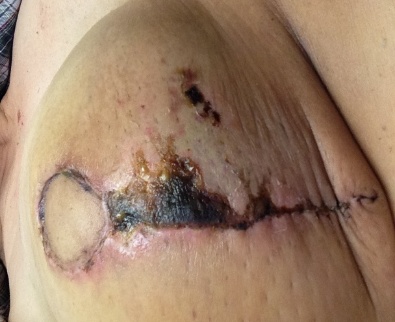
By two months the change was plain to see: the tissue had softened, swelling had come down, and she had gained more mobility. By three months, the scar was flattening and her skin texture had improved a great deal. She said the sessions were "the thing that made recovery feel possible".
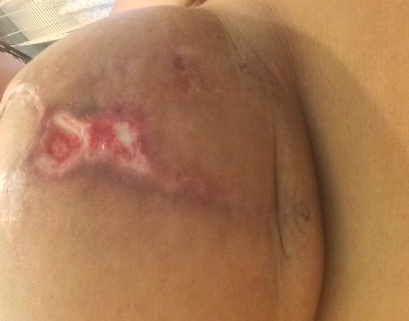
That experience is not unusual. Many of my post-surgical clients recover faster, feel more comfortable, and are happier with their results than they expected to be.

What Happens During a Session
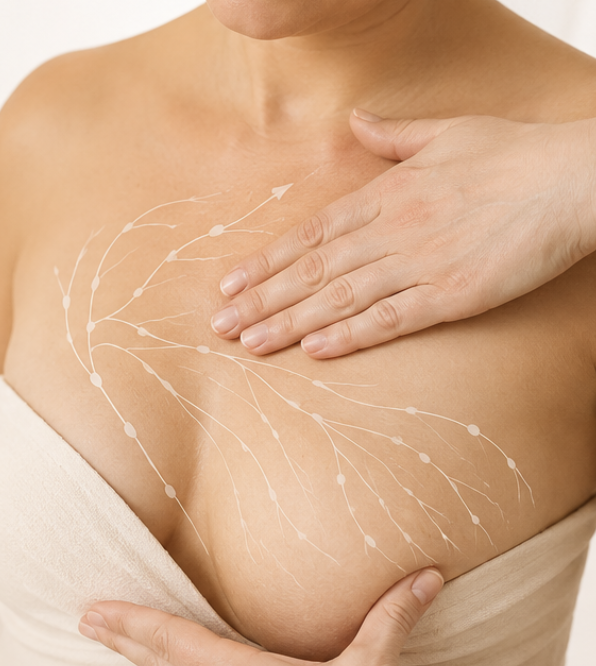
Each session uses slow, rhythmic hand movements that follow the natural direction of lymph flow. The pressure is feather-light, enough to stimulate the delicate lymph vessels without compressing them. Most clients find it deeply relaxing; many fall asleep during treatment.
In all cases, I focus on improving lymph flow to the nearest lymph node cluster which is generally the axillary area along with removing/releasing congestion especially in areas of surgical incisions, fibrosis and scarring.
Sessions typically run 60 minutes, though complex post-surgical cases may need longer. I will advise on frequency and how long to continue based on how you respond.
Why MLD Works
When lymph flows freely through congested or surgically disrupted tissue, healing and recovery happen. Waste and inflammatory fluid clear out. Tissue softens. Circulation improves. Scarring becomes more even.
Beyond the physical, the slow rhythmic nature of MLD has a calming effect on the nervous system: it shifts the body away from stress and into rest and repair. For anyone going through cancer treatment, major surgery, or a prolonged recovery, that matters.
Who It's For
MLD for breasts is well suited to:
· Women recovering from breast surgery (cosmetic, reconstructive, or oncological)
· Clients managing breast lymphoedema or post-surgical swelling
· Those experiencing breastfeeding complications like engorgement or mastitis
· Women with benign breast conditions — cysts, fibrocystic tissue, or fibroadenoma
· Clients dealing with hormonal breast tenderness (puberty, pregnancy, menopause)
· Men recovering from gynaecomastia surgery
· Anyone seeking scar rehabilitation following breast procedures
Please note:
A wired bra for those special occasions is reasonable. However, long term daily wear of such tight bras is not advisable as it can restrict movement of good lymph flow. My advice to clients is to invest in a good, comfortable support bra.
MLD is a complementary therapy and does not replace your GP or medical team. Any new or persistent breast lump, skin change, nipple discharge, or unexplained asymmetry must be seen by a healthcare professional before treatment begins.
Client Reviews
"Genuinely helpful sessions with Jan Moor. Had done all the blood testaments nothing showed, but I had unexplained bloating and discomfort in my stomache. I was significantly improved after one session- 48 hours later I was a different person. I am returning for maintenance. Appreciate Jan’s calm and kind manner and suggestions. A wealth of experience. Takes the time to listen."
"Jan Moor is an amazing therapist who truly has a gift. She specializes in lymphatic drainage and works only with her hands — no machines, just pure skill and intuition. You can feel that she genuinely connects with her patients and understands what their body needs. Jan has developed her own unique method, and the results are incredible. Having her in your life is a true blessing — she helps you feel better both inside and out. I can’t recommend her enough!"
"I love going to see Jan Moor at the Vitality Centre. Jan is absolutely incredible. Really. It's a fantastic experience every. single. time. Jan listened carefully and confidentially to my health concerns around lymphoedema prevention post extensive surgery and tailored my treatment plan accordingly. Apart from feeling a huge difference, I am learning lots too. Big bonus."
"I must say that I am so fortunate to have met Jan and she has been assisting me with my three cancer related surgeries performed in the last 1.5 years. The weekly sessions have definitely speeded-up the healing process after all surgeries performed. Jan is very patient, professional and most importantly; she explains what she does during treatment.
After mastectomy, I experienced difficulties with the healing process of my “newly reconstructed breast” using my own body tissue; the blood flow was not circulating, properly. So, parts of my “new breast” started to die. The swelling didn’t go down months after the first surgery; and I couldn’t see any progress.
The surgery had been performed in Hong Kong and no one recommended lymphatic drainage therapy. I guess, it is not that common to have this kind of therapy and many are not even aware of its existence. I recall I was so lucky to have learnt of this treatment after going back to my home country, Germany and seeking advice. It was there that my German doctor who works in a Cancer Center university hospital recommended lymphatic drainage therapy as early as possible after surgery.
So, after having started the treatment, I could finally see improvement: the swelling definitely went down and the breast tissue recovered. I am so grateful.”"
FAQs
Is MLD painful? Not at all. The pressure is feather-light and most clients find it relaxing.
When can I start MLD after breast surgery? It depends on your procedure and your surgeon's advice. Many clients start within two weeks of surgery, once the wound has healed enough. Starting early makes a real difference to swelling, scarring, and how freely you can move but always check timing with your surgeon first.
How many sessions will I need? It really depends on your situation. Post-surgical clients often come weekly for the first one to three months, then less frequently as they heal. For ongoing conditions like lymphoedema, regular maintenance sessions work best.
Is MLD safe after breast cancer treatment? Yes, when carried out by a trained therapist with oncological experience, MLD is safe and is actively recommended as part of cancer rehabilitation. Always let your oncologist know before you begin.
Can MLD help with breastfeeding problems? Yes. Lymphatic drainage can work well for engorgement and mastitis, it clears blocked ducts and reduces inflammation without affecting milk supply. However, if signs of infection develop, a healthcare provider should be consulted.

